
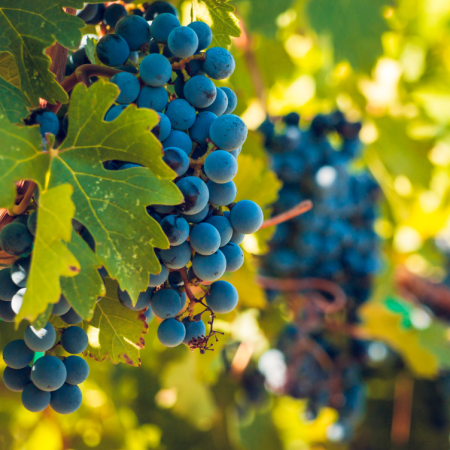
When it comes to vineyards, the speed with which results can be achieved in terms of the harvest depends heavily on organic and mineral fertilisation.
Fertilisation practices should be determined on the basis of the vineyard’s life cycle, which comprises two phases: the early phase and the second, more mature, adult phase.
On average, the juvenile stage lasts two years, after which the vineyard officially begins to bear fruit.
At each of these two stages, the vineyard has specific needs, and different fertilisation techniques must be used to meet them.
Let’s take a look together at the benefits of using organic and organo-mineral fertilisers in vineyards.
Discover all the organic and organo-mineral fertilisers from Bea!
What are the fertiliser requirements of a vineyard?
Whilst in its early stages the vineyard requires fertiliser that promotes its growth – and is therefore nitrogen-based – during the mature phase it needs a greater quantity of nutrients.
Specifically:
- Iron: must always be present in alkaline soils with a pH greater than 6 to prevent cases of iron chlorosis;
- Magnesium: many soils are deficient in it, which is why it is advisable to carry out targeted assessments and always bear in mind that the amount of this nutrient must be lower than that of potassium, nitrogen and phosphorus;
- Nitrogen: helps to maintain a consistent level of vegetation and yield in the vineyard;
- Phosphorus: we always use less of it than the other nutrients;
- Potassium: this nutrient helps to increase the sugar content of the must and has a positive effect on grape ripening.
Some thoughts on the use of organo-mineral and organic fertilisers in vineyards
Years of over-farming and the use of poor-quality fertilisers deplete the soil, compromising its productivity.
There is no doubt that the use of organic and organo-mineral fertilisers involves higher costs and does not yield results in the short term (unlike traditional fertilisers), but it does enable us to address and restore the physical, biological and chemical deficiencies in the soil resulting from previous management practices.
It is important that the soil in which the vineyard is situated contains humus, particularly the stable type, which has a higher content of lignin, cellulose and other nutrient-rich compounds.
>>> Watch the testimonial from this winegrower who has used BEA fertilisers
How to manage the pH problem
Generally speaking, a good guiding principle to follow when cultivating a vineyard organically is to use fertilisers based on organic nitrogen, potassium and phosphorus.
However, when choosing between organic and organo-mineral fertilisers, the pH factor must not be treated lightly.
Please remember that:
- A high pH (i.e. 7 or above) requires fertilisation involving the use of sulphur to restore the pH to neutral;
- It is good practice to use products with an acidic pH to help the soil make better use of nutrients.
For the organo-mineral fertilisation of vineyards, Bea recommends Ergofert BORON: thanks to the presence of amino acids, enzymes, proteins and organic carbon that undergoes slow biodegradation, it ensures rapid absorption; boron and molybdenum also promote the production and synthesis of chlorophyll and proteins.
>> Find out more about Ergofert BORO – an organo-mineral fertiliser
Enriching the soil with organic matter using the green manure technique
The green manure technique helps to enrich the soil with organic matter, thereby improving its structure.
This practice involves the use of a seed mixture which also helps to create an environment that is unfavourable to the development of nematodes.
>> Click here to find out how to control nematodes in the soil
The application of this technique requires the correct balance of inorganic and organic fertilisers.
It is advisable to carry out a soil analysis every three years to ensure better fertilisation, adjusting the fertiliser regime each time according to the soil’s requirements.