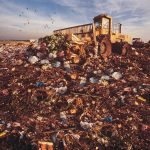

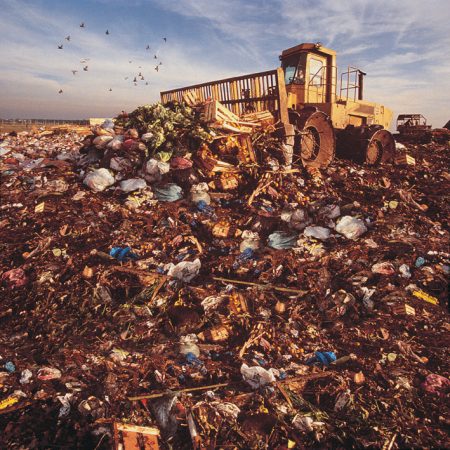
The storage of municipal solid waste in landfills for long periods of time entails a number of drawbacks, which could be eliminated or drastically reduced by subjecting the waste to stabilisation processes, which may be followed by thermal compaction or the recovery of the stabilised material.
In fact, if they are left in landfill permanently, they cause:
- unpleasant odours that linger for years even after the site has been permanently closed;
- presence of insects and rodents;
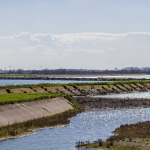
- leachate that continues to be produced even years after the landfill has been closed and which usually persists over time, often outlasting the waterproofing layer;
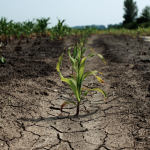
- the release of foul-smelling and phytotoxic gases, which result in extremely long periods before grass can grow and even longer periods before reforestation can take place;
- a considerable outlay of funds required to attempt to reclaim an area of limited use.
Come abbiamo detto esiste però un metodo efficace per eliminare o ridurre considerevolmente il disagio provocato da questi accumuli di rifiuti. Bea Srl ha sviluppato infatti in composto enzimatico batterico specificamente messo a punto per la bioelaborazione e in genere il compostaggio dei rifiuti organici: il BIOZIMOSTART.
Before applying this product, it is essential to carry out a preliminary assessment of the specific situation in order to correctly evaluate the required time and operating procedures.
Remediation of disused landfill sites: the study and the benefits
The following parameters must be assessed:
- time elapsed since the start of the contributions;
- the minimum and maximum thickness of the waste present in the landfill;
- materials used as a cover during the landfill’s operational life;
- thickness and types of materials used for the final roof covering;
- the quantity and quality of the leachate produced;
- volume of waste present;
- whether or not other waste is present;
- surface area of the landfill;
- rainfall in the area.
Once you are aware of all the information, you can apply the product in accordance with the specified application procedures (see below) and enjoy a number of benefits:
- a reduction in volume of between 20 per cent and 45 per cent;
- elimination of unpleasant odours, insects and rodents;
- reduction of leachate and its pollutant load;
- the immediate possibility of using treated waste for reforestation;
- the landfill site becomes a store of organic fertiliser, completely free from phytotoxicity;
- All work processes take place without any significant production of foul-smelling gases.
In summary, the correct use of bacteria and enzymes makes it possible to facilitate, direct and control the biological processes that rapidly transform – through partial humification of the organic matter – substances that are, and would remain, phytotoxic for decades into fertiliser.
Request a consultation now!
Treatment of pergolas and landfill sites: how to proceed
Given the complexity of the parameters that need to be taken into account, only a brief description of the procedure can be provided.
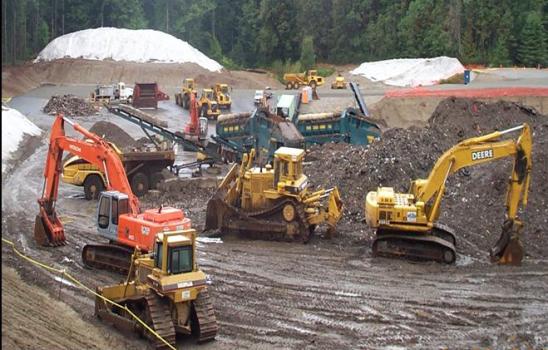
The waste in storage is gradually extracted and treated with enzymes, together with carefully selected microorganisms, to initiate and control specific biological processes.
They are therefore arranged in heaps of an appropriate size (using the same area as the tip) and turned at least once a week.
The progress of the fermentation processes must be kept under close observation, with further additions of bacteria and enzymes made where necessary; humidity levels must also be monitored to ensure they remain within certain parameters.
This process enables the organic fraction to stabilise rapidly, eliminating the causes behind the production of those biochemical compounds that give rise to foul odours, the high pollutant load in leachate and the inability for vegetation to establish itself quickly once the landfill site has reached capacity.
Once stabilised (this may take up to 90–100 days from the time of inoculation), the treated waste is returned to the site from which it was collected.
The duration of the operation varies and depends on the equipment used; in fact, it is possible to process anything from a few hundred to thousands of cubic metres per day. The time taken for grass establishment may vary, depending on whether the work begins with sowing or involves the use of pre-prepared turf.
>> Use and dosage of the product
BIOZIMOSTART is used for the treatment of leachate and for landfill remediation at a rate of 100 g per m³, diluted in a sufficient quantity of water to allow it to be distributed over the material to be treated.