
Oil and Pollution
Crude oil consists of a mixture of various hydrocarbons – substances composed solely of hydrogen and carbon – mixed with water and other impurities. Whilst this complex of substances is important from an energy perspective, it is dangerously harmful to nature and to humans. Indeed, it has a significant social and environmental impact, resulting both from accidents and from routine activities such as seismic exploration, drilling and the disposal of polluting waste.
As well as, of course, contributing to the greenhouse effect through the emission of combustion gases.
Oil spills
Refined oil spilled from oil tankers involved in accidents has damaged entire ecosystems, such as those in Alaska, the Galápagos Islands, Spain and many other places.
Tuttavia esistono dei piccoli microrganismi in grado arginare il problema degli sversamenti petroliferi sia in mare che sulle coste; infatti la loro caratteristica è quella di demolire la struttura stessa del petrolio, trasformandolo in composti non dannosi per l’ambiente, e addirittura favorevoli allo sviluppo della vita terrestre e acquatica.
However, for any operation to be successful, and to respond effectively to oil spills, it is necessary to understand the conditions under which microorganisms and enzymes must act; there are various water contamination parameters to be assessed:
- Water temperatures;
- presence of currents;
- amount of dissolved oxygen;
- if the oil has already been treated with chemicals that have caused it to sink to the seabed;
- age of the spill;
- an adequate supply of mineral nutrients such as nitrogen, phosphorus and others.
Depending on the situation at hand, there are various methods of intervention to tackle the problem of oil pollution.
1 – Treatment of oily water containing floating oil
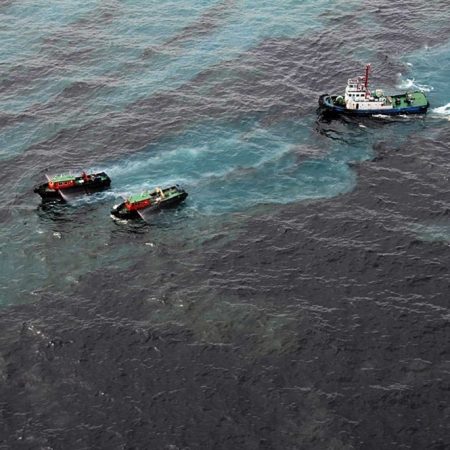
Quando ci troviamo di fronte ad un problema di sversamento petrolifero non trattato con prodotti chimici, vedremo il petrolio galleggiare sull’acqua in una densa macchia scura. In questi casi possiamo agire come indicato di seguito utilizzando una miscela enzimatico batterica da noi formulata: il BIOZIMOIL.
The patches are, in fact, sprayed with our product – a bacterial enzyme mixture, combined with mineral nutrients and any emulsifiers – whilst the wave action is left to provide the oxygenation.
The treatment of oily water with BIOZIMOIL enables the oil to be broken down within a few weeks or a few months at most, often with just a single application. If a faster effect is required, further treatments are necessary.
The outcome of the process depends largely on the temperature at which the bacteria are operating and on the availability of oxygen; the lower the temperature (below 18 °C), the slower their action.
At temperatures above 18°C, the yield is significantly higher, provided that sufficient oxygen is available; the concentration of oxygen in solution decreases as the temperature rises.
Request a consultation now!
2 – Treatment of oily water containing settled oil
Il trattamento di acque oleose in caso di petrolio affondato si può verificare in prossimità di coste, in questi casi, con particolari situazioni di emergenza è possibile intervenire fintantoché ci si trova in profondità limitate. Infatti la miscela enzimatico batterica del BIOZIMOIL, con gli eventuali nutrienti minerali, deve essere portata a contatto, con opportuni mezzi, dello strato che deve essere metabolizzato.

This activity requires the utmost care when analysing the currents, as they could prolong the time taken to complete the operation successfully by dispersing the biological material used.
Here too, temperature and oxygen play a crucial role in the success and speed of the treatment in the affected area.
3- Treatment of oil-contaminated water in wastewater treatment plants
If we find ourselves having to deal with water contamination caused by oil pollution near sewage treatment works, we can take action using the BIOZIMOIL mixture in several stages.
BIOZIMOIL, in fact, introduces and sustains the microbial life forms that break down oil; it is therefore necessary to carry out an initial treatment followed by several subsequent maintenance doses to ensure the water is fully remediated.
To conclude: any treatment must always be preceded by a thorough preliminary study and laboratory tests to identify the best course of action and the optimal quantities of BIOZIMOIL and supplements to be used, thereby avoiding disappointing results and, above all, unnecessary expenditure.