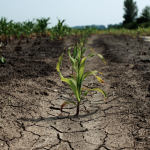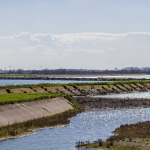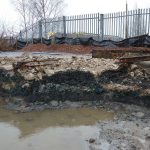

The phenomenon of root asphyxia is caused by an excessive amount of water in the soil near the plant’s roots, and is common in very compact soils consisting mainly of clay.
This phenomenon prevents the roots from being properly aerated; over time, they rot and cause the whole plant to wither.
DEFINITION
Root asphyxia, or waterlogging, is the phenomenon whereby water from rain or irrigation remains on the surface of the soil, almost completely filling the soil’s pore spaces and depriving them of air.
Clearly, prolonged waterlogging has extremely negative consequences for agriculture.
To be more precise:
- It hinders the normal supply of oxygen to the roots, causing them to rot;
- It makes plants more vulnerable to pest attacks;
- It inhibits the oxidation of certain plant nutrients, such as nitrogen and sulphur;
- It exacerbates the loss of nutrients, particularly nitrogen;
- It causes the dispersion of colloids and the breakdown of structural aggregates;
- It makes the ground impassable.
CAUSES
There are two types of waterlogging: surface waterlogging, which occurs when the rate at which water penetrates the soil is slower than the intensity of the rainfall and the ground does not have a sufficient gradient to drain off the excess water.
Subsurface waterlogging, on the other hand, occurs when water remains in the surface layers of the soil for a shorter or longer period, occupying the macropores that generally contain air.
The effects of waterlogging on plants vary and depend on the species and the stage of growth. In general, waterlogging leads to a reduction in root respiration, due to the reduced availability of oxygen.
CONSEQUENCES
This has drastic consequences, such as root asphyxia – the death of the plants – or a gradual decline as mineral nutrition is reduced or ceases altogether.
Many plants respond to these difficult conditions by developing shallow roots; however, this makes them less resistant to the periods of drought that generally follow waterlogging, and they lack a firm hold in the soil.
REMEDIES FOR ROOT ASFYXIA
What are the best techniques for trying to solve this problem?
The problem of waterlogging is tackled by implementing two possible solutions.
- On the one hand, it is necessary to eliminate the factors in the soil that encourage waterlogging
- On the other hand, it is necessary to use solutions that speed up the drainage of excess water
STAGE 1
To achieve the first objective, the surface of the land must be levelled: this means creating drainage channels or ridges in clay soils – which are the most affected by this phenomenon – to facilitate the surface runoff of water.
STAGE 2
To achieve the second objective, however, it is necessary to promote subsurface drainage. This means creating an underground network of pipes so that water drains away quickly.
Request a consultation now!
ORGANIC FERTILISER TO COMBAT ROOT ASFYXIA
ERGOFERT RESTORE SOIL BIO is a very effective product for tackling the problem of root asphyxia; it is an organic, nitrogen-based fertiliser.
The presence of silicon and activated carbon helps to prevent the effects of root asphyxia, significantly reducing the amount of water required for irrigation.
This product also promotes the uptake of insoluble phosphorus found in the soil and prevents micro-deficiencies that hinder vegetative growth, resulting in yellowing of the leaves.
ERGOFERT RESTORE SOIL BIO It can be used at any stage of the growing cycle and when there is a shortage of water.
THE PLANTS MOST AFFECTED.
Root asphyxia affects various types of plants. In all cases, prolonged waterlogging leads to a reduction in oxygen; what varies are the effects on the plant.
The following are particularly susceptible to this phenomenon: olive trees, vines, tomato plants, peach trees, apricot trees and citrus trees.
A. OLIVE TREE ROOT ASFYXIA.
The olive tree is subjected to numerous stresses throughout the year, and one of the most damaging of these is undoubtedly root asphyxia caused by waterlogging following heavy rain or a rise in the water table.
In both cases, there is a partial or total lack of oxygen in the soil, as water fills the spaces that were once occupied by air: oxygen remains only in the very top layers of the soil; the environment changes, and this leads to a shift in the ratio of aerobic to anaerobic bacteria. The latter increase significantly, causing a reduction in the levels of manganese, iron and sulphur and triggering denitrification processes.
A very long period of water stagnation leads to an increase in the presence of toxic substances such as methane or ethane, produced by anaerobic bacteria.
Root asphyxia in the olive tree causes an immediate cessation of root activity, including growth, and, in some cases, can lead to the death of ‘active’ tissues. These rapid changes manifest themselves in the canopy and thus become visible after some time: there is usually a reduction in vegetative activity, shoots stop growing, leaves begin to fall, and woody buds and flowers start to die. It is clear that the plant is weaker and more vulnerable to attack by pests. The severity of these symptoms depends on the degree of oxygen deficiency and the duration of the oxygen deprivation.
Prevention is always better than cure. This means that if the area where we want to plant the olive tree is prone to waterlogging, we must, first and foremost, install a drainage system.
B. CITRUS ROOT ASFYXIA.
Citrus root rot is caused by a fungus that thrives in waterlogged conditions. Plants affected by this disease initially show: slower growth, a reduction in leaf area and very closely spaced internodes. Prolonged waterlogging leads to the foliage turning completely yellow.
Prevention is also very important in this case: when growth resumes, the ideal approach would be to apply foliar treatments that prevent rot. As for treatment, the standard remedy is to dig into the soil around the collar to expose the surface roots and then apply specific products, perhaps copper-based ones.
C. APRICOT ROOT ASFYXIA.
The apricot tree is a small to medium-sized fruit tree, available in many varieties, and is also very well suited to enhancing the garden at home.
This is a plant that should not be planted in areas prone to very strong gusts of wind; furthermore, the apricot tree does not thrive in heavy, clayey soils characterised by constant waterlogging. Excessive moisture and waterlogging cause root asphyxia.
Root asphyxia in apricot trees is, unfortunately, an unsolvable problem: I would therefore advise you to water the plant thoroughly during the first two years after planting to encourage root growth. Thereafter, during the summer, it will only be necessary to water if the spring has been dry.
D. VITE RADICAL ASFYXIA.
The vine is a very delicate plant, which suffers from the winter cold, spring frosts and hail. Root asphyxia in vines is one of the most dangerous problems that can affect this plant: here too, excessive water leads to a lack of oxygen.
This situation, as in the previous case of the olive tree, leads to a shift in the ratio of aerobic to anaerobic bacteria, favouring the latter. A process of denitrification therefore begins, leading to a reduction in the levels of iron, manganese and sulphur and, if the waterlogging persists, an increase in toxic substances (such as sulphides or methane) produced by anaerobic bacteria.
In such a hostile environment, the root apices accumulate acetaldehyde and ethanol, which are then synthesised into ethylene and abscisic acid, causing the leaf stomata to close and leading to a significant reduction in photosynthetic activity.
E. PEACH ROOT ASFYXIA
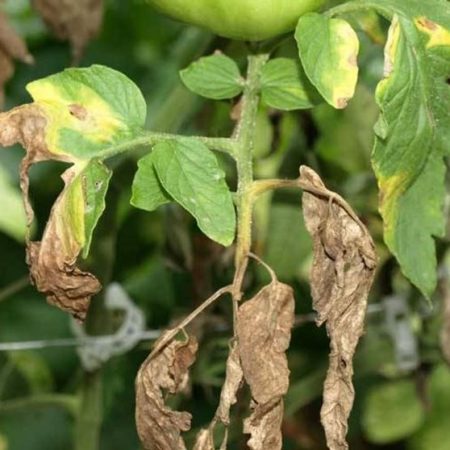
Peach trees are also highly susceptible to root asphyxia. Root asphyxia in peach trees manifests as a general weakening of the plant, stunted growth and progressive wilting of the leaves.
Affected roots give off an unpleasant smell of fresh mould and, particularly in the autumn months, fungi may form: the colonisation of the plant by these microorganisms causes lesions of various origins.
Peach trees grown in soil rich in organic matter, where root asphyxia is a frequent problem, are particularly susceptible to root rot.
F. RADICAL ASFYXIA IN TOMATOES
Meeting the water requirements of tomatoes is essential for ensuring a good harvest; however, one must not overdo it. Tomatoes are a particularly sensitive crop, both because of the physiological characteristics of their root system and because they are susceptible to both water shortages and excesses.
In tomato crops, water deficiency has a negative impact on growth, whilst excess water constitutes a waste of water, causes the leaching of nutrients and root asphyxia, increases susceptibility to pest attacks and leads to a deterioration in product quality.
Prevention is also very important in the case of root asphyxia in tomatoes: it is essential to strike a balance, not to increase irrigation to the maximum levels, and to take rainfall levels into account when assessing whether, in some cases, irrigation should be suspended.