
When we talk about organic fertilisers, we are referring to all those fertilisers made from substances derived from animal and plant sources.
Over the years, interest in organic fertilisers has grown steadily, enabling many people to rediscover the beauty and importance of having their own vegetable patch to tend.
What are the reasons behind this trend?
La tutela dell’ambiente ed il bisogno di un’alimentazione corretta e controllata.
Pollution puts a strain on the health of our planet every day: using organic fertilisers means avoiding substances that cause pollution over time and, at the same time, ensuring that we can eat natural produce.
If you’ve recently decided to start a small vegetable garden at home, this article may be of help to you: together we’ll explore the range of organic fertilisers available and the benefits of using them.
Visit the products section at Bea, where you will find a complete range of organic fertilisers suitable for growing organic food: the company’s aim is to promote the development of agriculture that works in complete harmony with nature.
Request a consultation now!
Back to basics: the benefits of using organic fertilisers.
Using organic fertilisers means going back in time, to when farming respected the rhythms of nature, chemical fertilisers were not used, and our diet consisted of ‘seasonal produce’.
Nowadays, much of agricultural production relies on chemical-synthetic fertilisation, that is, a method that uses both chemical and organic fertilisers and aims to ensure that the soil once again produces the same quantity of nutrients that has diminished over time.
However, this overlooks the fact that the soil is an element whose vitality depends on numerous factors: the widespread use of chemical and synthetic fertilisers has contributed to the depletion of the humus layer that years of organic fertilisation had created.
As a result, rather than increasing, the soil’s fertility has fallen DRASTICALLY.
Organic fertiliser provides the soil with the right amount of nutrients precisely because it is made from organic materials, thereby helping to keep the soil fertile at all times.
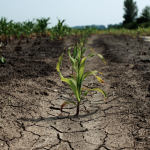
Furthermore, organic fertilisers can help retain moisture in the soil during periods of severe drought, reducing the need for frequent watering.
List of organic fertilisers: types available.
As we have seen, organic fertilisers make it possible to keep the soil fertile and ensure that plants grow healthily and in a balanced way, taking up all the nutrients they need.
The list of organic fertilisers includes fertilisers of animal, plant and mixed origin: let’s take a look at the main characteristics and benefits of each.
Organic fertilisers of animal origin.
Organic fertilisers of animal origin include livestock slurry, dried blood from slaughtered animals and farmyard manure.
Cattle manure, better known as farmyard manure, is without a doubt the organic animal fertiliser par excellence.
It is very simple to make: simply mix the livestock manure into the litter and then, once you have gathered the required amount, leave it to ferment in the sun.
Cattle manure is the most commonly used type, whilst horse manure is rarely used as it is more expensive and is best suited to higher-quality organic crops. Pig manure should be avoided as it does not produce good results.
Although these substances are natural, their extensive use could compromise soil fertility and cause damage to the environment: for example, livestock manure not only gives off a foul odour but, over time, also compromises the soil’s aquifers.
Nutrients such as nitrogen are not taken up by the roots of plants, whilst others are eliminated entirely.
Organic fertilisers of plant origin.
Compost, wood ash, green manure and olive pomace – a substance obtained from the production of olive oil – are all organic fertilisers of plant origin.
Compost is made by allowing plant waste – such as fruit peel, dry leaves that have fallen from the trees in the garden, or even the leftovers from your vegetable patch – to decompose.
The maceration and fermentation process for these materials must follow very specific rules, in order to produce an organic fertiliser rich in nutrients and growth-promoting substances.
Never throw away the ash from your fireplace, as it is rich in nutrients that are vital for the soil, particularly potassium and phosphorus.
If, on the other hand, you don’t have a fireplace at home, you can always make use of the green manure technique, which involves growing plants that are then ploughed into the soil to enrich it with organic matter and increase its water reserves.
Finally, olive pomace is also an excellent organic plant fertiliser, as it is rich in high-quality nutrients that help improve the soil’s composition.
Mixed organic fertilisers.
Finally, the last type of organic fertiliser is the mixed variety.
Compost and chicken manure fall into this category.
As we have seen previously, compost is produced by the decomposition of plant and animal matter; poultry manure, on the other hand, is obtained by processing bird droppings; it is sold commercially in the form of pellets and is valued for its nitrogen, phosphorus and potassium content.
Just as with livestock slurry, certain precautions must also be taken with chicken manure.
If used in large quantities, this organic fertiliser could cause damage to the soil, as bird droppings may contain traces of the substances on which these animals feed, which are not entirely organic.