

Why do plants get sick?
Organic factors (plants, animals, etc.) and inorganic factors (soil, water, air, etc.) are closely linked to the existence of every organism, establishing a balance that cannot be destroyed. One such balance is the soil, which is a living organism but is, more often than not, overlooked.
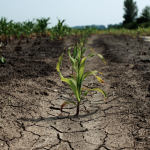
The soil is all too often damaged by the thoughtless, incomplete and unbalanced application of chemical fertilisers; as a result, plants are stressed by these imbalances, their health is compromised, and they become increasingly susceptible to pathogens (fungal, bacterial, viral, etc.) and plant-eating insects. The only recourse is to resort to the use of plant protection products, which, whilst reducing damage to plants, have definite negative side effects that we do not yet fully understand, or indeed understand at all. Unfortunately, there is a widespread belief that there will always be a chemical product to ‘rectify’ human error. Excessive use of plant protection products, often applied without any real need, contributes significantly to the pollution of the environment and crops.
In conventional techniques, the soil is seen as an inanimate entity to be manipulated without the slightest sense of the bigger picture. It is clear that once the balance has been disrupted, it takes a great deal of effort to put things right.
When a plant is attacked, it is a clear sign that something has disrupted the balance in which the plant was previously thriving; it would therefore be wise to work out where and how mistakes were made and to identify the source of the problem.
Fertilisation should not be viewed as a means of directly nourishing plants, but rather as providing what is necessary to enhance microbial life in the soil, which is an essential substrate for the balanced growth of plants.
Therefore, slow-release mineral fertilisers should be used, as these integrate into the soil’s metabolic processes whilst minimising any disruption to the activity of the microorganisms that are essential for ensuring the availability of the mineral salts required by plants for balanced growth. We have observed that wherever plant diseases and insect infestations occur, the plants are stressed and weakened.
Wherever we have intervened to correct the most common errors (relating to nutrition, soil management, pruning, plant protection products, irrigation, etc.) by applying natural products consisting of mineral catalysts, enzymes and microbial consortia, a reduction in stress levels has been observed. Furthermore, these natural products exert an extraordinary competitive exclusion effect against pathogens, strengthen the plants’ defence system and detoxify both the plant and the soil. In this way, it is the plant itself that reacts and begins the healing process, whilst the spread of plant diseases is prevented.
No one knows better than the plant itself how it should defend itself; all we need to do is provide it with the means to do so