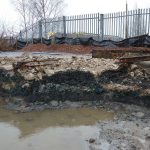

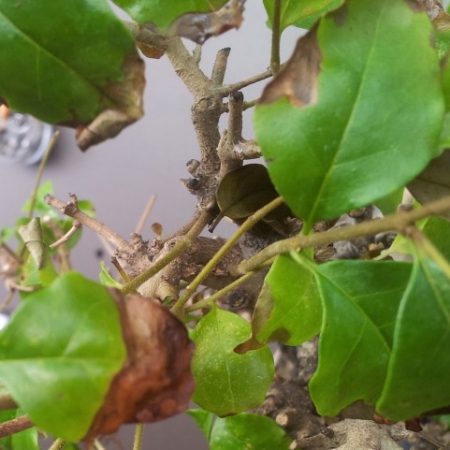
Root rot is a disease that affects plants when they are under attack from fungi, bacteria or nematodes.
The effects caused by root rot are disastrous, as all the organs responsible for ensuring the plant receives adequate nourishment cease to function.
Let’s find out together what causes root rot, the most effective ways to treat it, and how to prevent this disease.
Root rot: the root of all evil.
Prima ancora di individuare i rimedi per combattere questa malattia delle piante, è necessario identificare e conoscere le cause che la determinano.
Root rot is caused by a fungus, Armillaria mellea, whose formation and spread are encouraged by:
- Over-watering
- The use of land contaminated with fungi
A plant affected by root rot gradually withers away over time: the leaves begin to turn yellow rapidly, the roots rot and take on a blackish colour, and the plant’s foliage bends and droops as it is no longer receiving any nutrients.
As the plant begins to wither, it is also vulnerable to attack by pests and, unfortunately, is bound to die within a short space of time.
Plants are particularly susceptible to this pathogen when they are weakened or have tears in their trunks.
Root rot: which plants are at risk?
The plants most susceptible to the pathogen that causes root rot belong to a wide variety of species.
Specifically, we have: primroses, violets, rampion, rhododendrons, azaleas, climbing plants and numerous fruit trees such as apple, pear, peach, cherry, grapevine, olive and poplar.
Root rot: effective remedies.
A plant affected by root rot can still be saved, provided the disease is still at an early stage.
The first thing to do is to remove all the branches with yellowed leaves, exposing all the parts of the plant that have been affected by the fungus.
The next step is to remove the mould by scraping the surface, whilst taking great care not to expose the bare wood.
Removal is followed by a disinfection stage, which is usually carried out using copper or iron salts, which help to inhibit the action of the fungus responsible for rot; the soil must also be disinfected, and sulphur is certainly a valuable ally in this regard.
Request a consultation now!
Prevention is ALWAYS better than cure: DON’T forget that!
Prevention in the field of cultivation is a very important activity, as it enables us to protect our plants from diseases which, if not detected in time, could cause them to die.
So why expose the plant to the risk of root rot when it is possible to prevent this disease?
The first preventive measure is soil drainage.
Whilst it is true that most plants are attacked at the roots by root rot when they are exposed to water for a prolonged period, the first thing that must be avoided is waterlogging.
Soil drainage should be carried out particularly during spring and the summer months, as it is precisely at this time of year that pathogens are most active.
As well as waterlogged soil, surface waterlogging must also be avoided.
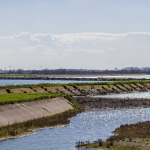
To do this, you need to create slopes to help water run off the surface: build drainage channels or underground drains, particularly in the case of fruit trees that have been planted in compacted, impermeable soil.
Again, with a view to prevention, please remember to:
- Avoid over-watering;
- Do not fertilise plants during the summer, when temperatures are too high;
- Promote soil drainage by using techniques such as aeration and mulching, which help to prevent weeds from growing and control the moisture level in the soil;
- Water your plants regularly, including evergreens such as conifers;
- Always use fresh potting compost, as the old one may be contaminated with fungal spores.
Root Rot: Ergofert RESTORE SOIL BIO is the ANSWER.
To combat and prevent root rot, Bea recommends Ergofert RESTORE SOIL BIO, an organic fertiliser containing nitrogen that is ideal for fertigation of crops.
This product is particularly suitable in such cases, as the presence of silicon compounds and activated carbon helps to reduce the amount of water required for watering.