
Fertilisers and manure for organic farming: how do they differ?
Do you know the difference between the use of fertilisers and the use of organic fertilisers? These two products – or rather, these two approaches – are fundamentally different, and we’ll now explain why.
Organic fertiliser, as the name suggests, is a product that is applied to soil used for organic farming in order to increase its fertility.
Fertility is simply the ability of cultivated land to be sufficiently productive.
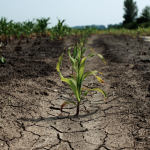
But what determines soil fertility? The percentage of humus present in the soil.
Humus is, in fact, a mixture of organic substances which, through processes of decomposition and reworking, interact with the mineral fraction and the circulating solution, thereby influencing the chemical and physical properties of the soil.

Purtroppo al giorno d’oggi il problema principale è la scarsa percentuale di humus nel terreno, sia in agricoltura biologica che tradizionale, che risulta quindi povero per le piante e le colture ed è questo il motivo per cui si continua a bombardarle con fertilizzanti.
These products, both chemical and organic, are applied to the soil to restore the correct humus levels and thus support the proper growth of crops; however, they are not capable of acting effectively in the long term, and this is where fertilisers come into play.
Fertilisers for organic farming provide the plant with genuine nourishment: nutrients that remain available to the plant and are taken up as and when actually required.
Unlike chemical fertilisers, the organic fertilisers produced by Bea are balanced mixtures of various nutrients; they contain nitrogen, potassium, carbon, magnesium, calcium and other elements in varying proportions, and are certified for use in organic farming.
Request a consultation now!
How do Bea’s organic fertilisers affect plants and soil?
Fertilisers for organic farming formulated in this way must be applied to the plant’s microhabitat, in the area known as the ‘rhizosphere’, where the plant’s roots are located. The rhizosphere consists of a very delicate microbial community that is essential to the plant’s health. It contains fungi, bacteria and microorganisms that feed on the plant’s waste products, breaking them down into compost and returning them to the soil, thereby promoting the mineralisation of humus.
If this delicate balance is disrupted, the plant is no longer able to absorb nutrients properly, leading to serious growth problems.
Unlike other products, the organic fertilisers in the ‘Ergofert’ range act within the microhabitat found in the root zone, providing the plant with the nutrients and tiny microorganisms it needs to develop properly.
In fact, the roots sense an environment or microenvironment that is favourable to their growth and so continue to expand, whilst continuing to produce beneficial bacteria.
What are the effects on the soil and the surrounding microclimate?
But the benefits do not stop there: in fact, at the end of the growing cycle, the product helps the residues to break down into humus, preventing them from becoming a breeding ground for pathogens.
Questo sistema ogni anno arricchisce il terreno di circa 2 tonnellate di humus senza ulteriori apporti dall’esterno. Basti pensare che il meccanismo che si mette in atto con la decomposizione e il compostaggio degli essudati radicali (gli scarti delle piante) permette di ridurre le emissioni di anidride carbonica di circa 3.66 ton per quintale, l’equivalente di tutta la CO2 contenuta in circa 9 milioni di aria.
This results in a significant contribution towards reducing the greenhouse effect!!