
Did you know that the Ancient Egyptians were the first to use rock flour?
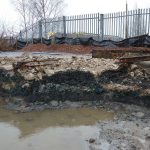
The silt was discovered around 3,000 years ago along the banks of the Nile: at the end of each flood, the river left behind this compound, formed by the combination of humus—resulting from the aggregation of rock dust—and organic components originating from the forests of Equatorial Africa.
The category of rock flours comprises a variety of substances which, whilst differing from one another, share a specific characteristic: they are all produced by grinding rock.
In organic farming, rock flours are very useful: when used correctly, they make excellent fertilisers, are an important ingredient in composting, and are reliable allies in the fight against pests and fungi.
Rock dust: what it is and where it comes from.
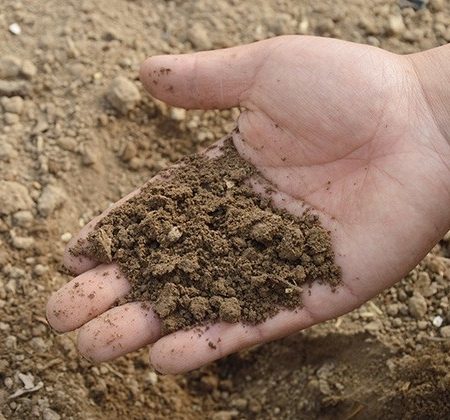
Rock flour, or rock dust, is a crushed aggregate rich in salts, some of which are insoluble.
In order for it to release its beneficial properties and become an excellent organic fertiliser, the minerals must be dissolved and broken down in the soil by the microorganisms that develop during the humification process.
The main uses of rock flour in the organic farming sector.
As these aggregates may come from different sources, there are various types of rock flour: depending on the origin of the powder, the percentages of calcium, potassium and magnesium present may vary.
As mentioned at the start, rock dust is widely used in composting, as a fertiliser and as a pest control agent.
Ask one of our experts for their opinion!
Rock flour in composting.
In composting, the two most commonly used rock meals are bentonite and phosphorite.
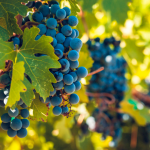
Bentonite is derived from clay and is also used in industry and in the wine-making sector: whilst the raw variety is used in the former, the fine variety is preferred in the latter.
Clay is usually recommended when dealing with sandy soils, where the soil structure needs to be improved; in composting, on the other hand, it is useful for retaining nitrogen and preventing its volatilisation, for combating the unpleasant odours that form during fermentation, and for helping to retain water and nutrients in the soil.
Phosphorite, on the other hand, is derived from the remains of marine organisms and is characterised by its high phosphorus content: when added to compost, this type of rock meal helps to increase its fertilising power.
Rock flour as a fertiliser.
Se utilizzato come fertilizzante la farina di roccia è un valido aiuto per riuscire ad ottenere una fertilità stabile e duratura nel tempo, dal momento che questi inerti permettono di trattenere i nutrivi e l’umidità.
Long-term use will keep your soil moist and fertile for longer.
Rock flour to combat fungi and aphids.
Sprinkling rock flour onto damp plants in the early hours of the morning, whilst there is still dew on the leaves, helps to combat aphids and fungal diseases.
Rock dust is therefore an excellent insecticide; it is not poisonous but must nevertheless be used with care: the dust settles on the insects, ‘clogging up’ the openings on their bodies and making it impossible for them to breathe.
This applies to both ‘good’ and ‘bad’ insects: so be mindful of the quantities and always protect your respiratory tract when using it.
MICROLIT ULTRA: rock flour from B.E.A.
BEA’s recommendation for rock flour is MICROLIT ULTRA, a completely natural product which is never toxic, even in the event of an overdose.
Thanks to its structural microporosity, this rock powder is characterised by its high capacity to absorb excess moisture, combat botrytis and adhere perfectly to the leaf surface, thereby promoting a drying effect.
MICROLIT ULTRA is not phytotoxic and is particularly suitable for use in the presence of heavy metals such as copper and lead, and against organic compounds such as toxins.