
Le stazioni di servizio sono punti in cui si produce un elevato inquinamento oltre che delle acque negli autolavaggi anche delle acque meteoriche.
The water from car wash facilities is polluted by sand, soil, fine dust, surfactants and hydrocarbons. Rainwater is mainly polluted by less volatile hydrocarbons, which are carried into the sewerage system after collecting on the forecourts.
The wastewater from toilets, cafés and restaurants contains easily biodegradable organic pollutants.
How to carry out the purification process
To treat the wastewater from petrol stations, a treatment plant must be constructed that includes a collection tank for all wastewater and rainwater; this tank serves to regulate flow and remove sand.
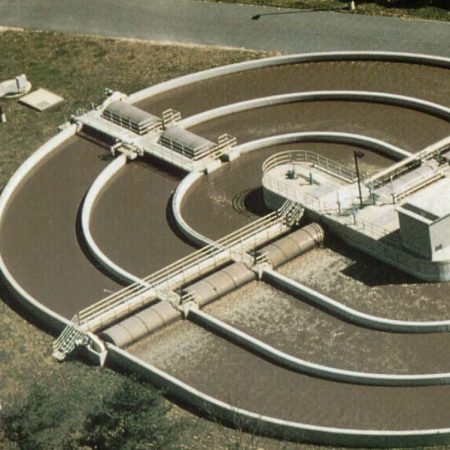
From the collection point, the polluted water flows into the oxidation tank, where the BIOZIMOIL bacteria are present; these will biodegrade the pollutants, including hydrocarbons, which they will feed on, transforming them into new bacterial cells that will form the activated sludge.
From the oxidation tank, the treated water, mixed with the activated sludge, will flow into the sedimentation tank so that separation can take place, allowing the water to emerge clear and the sludge (bacteria) to be recovered for reintroduction into the aeration tank.
To ensure that the microorganisms introduced by BIOZIMOIL can break down hydrocarbons and surfactants, it is necessary to channel the wastewater from the toilets and any bars or restaurants into the treatment plant.

Methods, timing and dosage
Given the nature of the pollutants, the water must be left in contact with the bacteria for 48–60 hours.
The amount of BIOZIMOIL to be used depends on the volume of water to be treated and its pollutant load.
For example, if 1,000 litres need to be treated each day, you will need 1,000 grams of BIOZIMOIL to start up the treatment system, followed by a daily maintenance dose of around 30–40 grams.
There must always be 10–11 grams of sludge per litre of water in the oxidation tank.
Excess sludge is removed and, following partial dewatering, can be transformed into an excellent organic fertiliser by mixing it with peat, blood, paper, coffee grounds, sugar cane bagasse, bean husks or other plant residues, and by composting the mixture using BIOZIMOSTART.