
The main reason why most people keep a vegetable garden is the chance to eat produce grown naturally, without the heavy use of chemicals.
However, when the time comes to disinfect the soil, there are many doubts about which products can be used.
It is possible to carry out this type of procedure naturally, and there are various solutions available.
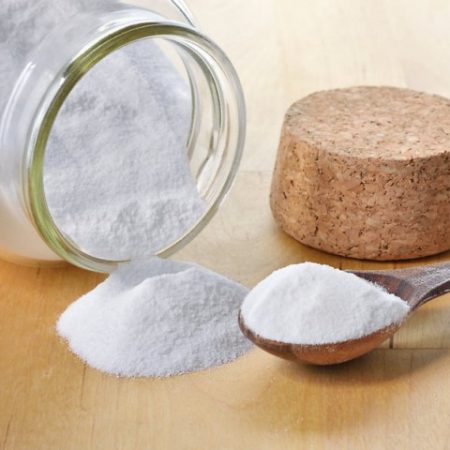
One of the most widely used and effective methods is undoubtedly the one that involves using bicarbonate of soda as a pesticide and fungicide.
In this article, we will look at how to disinfect soil naturally by making use of the properties of bicarbonate of soda, why it is important to use it, and how to prepare the soil solution.
How to disinfect soil naturally: the benefits and properties of bicarbonate of soda.
Bicarbonate of soda is a very versatile substance which, thanks to its properties, can be used in a variety of situations.
In particular, in agriculture, sodium bicarbonate is used to combat fungal diseases, such as powdery mildew or downy mildew, which are lethal to all types of vegetable plants: apple trees, lemon trees, courgettes and cucumbers are just some of the affected plants.
It is very difficult to eradicate fungi, as they spread through the soil very quickly thanks to the action of water and wind, which carry the spores, which can survive even in adverse weather conditions.
Fungi need an acidic environment to reproduce: as plant leaves are acidic, the first thing to do is to eliminate this environment that favours them.
Bicarbonate of soda has a basic pH: the solution we will be using will enable us to create a stable environment by adjusting the pH of the leaf surfaces, without damaging the treated plant.
Another important benefit of using bicarbonate of soda in agriculture is that it helps to neutralise soil acidity; the soil should have an optimal pH of 6.5–7.
How to make a solution of water and bicarbonate of soda.
It is very simple to prepare the solution to be used to disinfect the soil in your vegetable garden; simply mix bicarbonate of soda with water until you have a smooth mixture.
There is no exact quantity of bicarbonate of soda and water to use; the usual guideline is one kilo of bicarbonate of soda per 100 litres of water.
In practice, the quantities vary depending on the number of plants to be treated and the density of the foliage: the best course of action, therefore, is to assess these two factors and, accordingly, first determine the volume of water and then, proportionally, the amount of bicarbonate of soda.
Request a consultation now!
When to use bicarbonate of soda in agriculture: the importance of prevention.
Once the mixture is ready, it’s time to spray it onto the leaves of our crops to combat and prevent the spread of fungi.
In agriculture, prevention is very important, especially when we decide to manage our vegetable garden using organic methods.
How can you prevent the growth and spread of mould?
By preventing the build-up of damp, as a damp environment also encourages the formation and spread of mould.
I would therefore advise you to aerate the soil as much as possible, particularly when it rains, in order to reduce the moisture content, and to remove any excess leaves, especially from the lower part of the plant, which is usually the first part to be attacked.
Once the conditions that encourage the formation of damp areas have been eliminated, bicarbonate of soda can be used.
However, the effect of this substance is short-lived, so it is necessary to use the solution during periods when rainfall is more frequent or when the fungi are clearly visible.
It is only through perseverance that we can protect our plants from fungal attacks, by avoiding the conditions that encourage their growth.
Final recommendations.
As you will have realised, there are many benefits to using bicarbonate of soda: this substance is a valuable aid that enables you to manage and look after your vegetable garden naturally.
However, as with everything, one must never go too far.
As we have seen, bicarbonate of soda also helps to control soil acidity, but overuse would have severely negative consequences for the soil.
Excessive use of bicarbonate increases the soil’s alkalinity, thereby altering the soil structure due to the diffusion of colloids – substances that help retain water and the nutrients essential for plant growth in the soil.
The soil would eventually lose its compactness and crumble.
My advice, therefore, is to use bicarbonate of soda only when strictly necessary and when conditions arise that encourage the growth of mould.
Excessive use of this substance can also cause leaf scorch, particularly if the treatment is carried out during the hottest part of the day.
Always remember to water your plants and carry out these treatments when the weather is cooler, so in the evening or early in the morning.