
Product details
HOW IT WORKS
Given the great difficulty in eradicating plant pests using chemical products – because pest resistance to pesticides is increasing and because plants have a weakened defence system due to the loss of soil fertility and the extensive use of chemicals – there is a constant risk of new pest infestations.
B.E.A. has focused its research on strengthening the plants’ defence system and creating a hostile environment which, through biochemical processes and mechanical actions, leads to the death of plant pests. The application of this biotechnology does not result in any form of resistance.
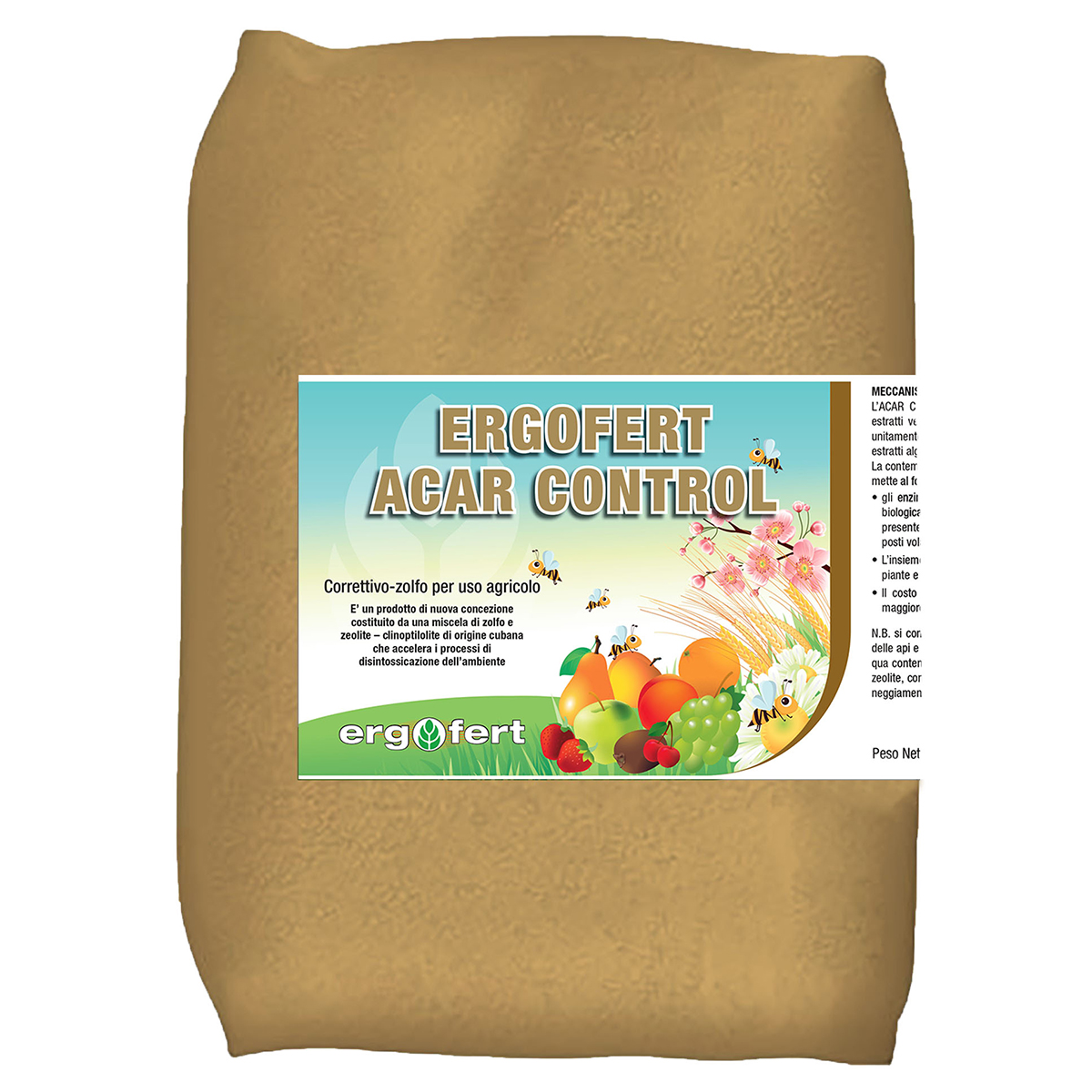
ACAR CONTROL is a preparation containing sulphur, silica, plant extracts, enzymes and mineral catalysts. It should be applied in conjunction withERGOFERT formulations containing enzymes, microorganisms and algal extracts, with the addition of Marseille soap.
The simultaneous presence of these versatile materials enables the formulation to carry out biochemical and biophysical processes:
• enzymes and mineral catalysts support the biological activity of the microorganisms which, slowly and steadily, oxidise the sulphur present in the preparation, producing minute quantities of volatile sulphur compounds;
• Marseille soap causes ACARCONTROL to adhere to the insects’ bodies, and when the water evaporates, it forms a film that suffocates them.
• The products of sulphur oxidation, which are harmless to humans, animals and plants but unpleasant to pests, combined with plant extracts, create a microenvironment that is highly hostile to the survival of mites, aphids, scale insects, bedbugs, etc. In this environment, the insects set off in search of a better habitat;
• As they move, the pests inevitably come into contact with the tiny, highly abrasive silicon crystals in the zeolite; this contact causes abrasions to their thin epidermis, leading to the leakage of bodily fluids and, consequently, immobilisation and death.
• When sprayed onto plants, this range of products not only creates an environment hostile to plant-eating insects, but also nourishes the plants and protects them from numerous fungal and bacterial plant diseases.
• Consequently, the cost of the treatments is recouped through increased production, improved quality and the absence of residues.